
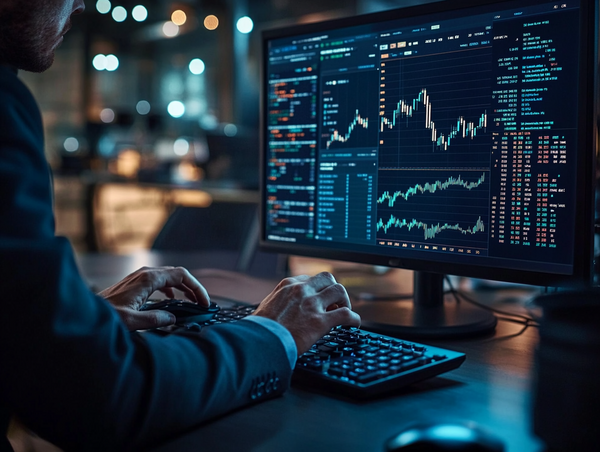
AI Stock Predictions: Can Machine Learning Improve Your Trade Timing?

Understanding AI Stock Prediction
AI stock prediction refers to the use of artificial intelligence models, particularly machine learning algorithms, to analyse financial markets and forecast future price movements. These models are trained on immense volumes of historical data, including stock prices, trading volumes, economic indicators, and even sentiment from news or social media. The ultimate goal is to identify patterns or trends that human analysts might miss, thereby providing a competitive edge in decision-making.
AI stock prediction harnesses the power of sophisticated machine learning and deep learning algorithms to forecast market movements with unprecedented precision. Unlike traditional analysis, these systems can:
- Process and analyse vast quantities of heterogeneous data simultaneously
- Identify complex non-linear relationships between market variables
- Continuously adapt to changing market conditions through learning algorithms
- Detect subtle trading signals invisible to human analysts
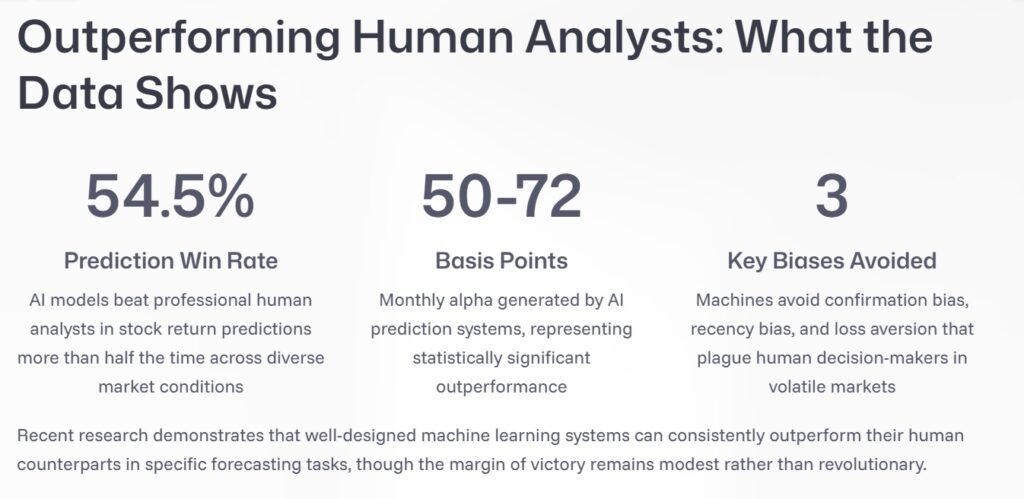
Unlike traditional statistical models that rely on predefined formulas, machine learning algorithms learn from the data itself. As they continue to process new data over time, the models can adapt and, theoretically, become more accurate in their predictions. This evolution is what makes AI particularly compelling in complex and dynamic environments like stock markets.
How Machine Learning Helps with Trade Timing
Trade timing revolves around identifying optimal entry and exit points. Poor timing can result in missed opportunities or amplified losses, while precise timing can secure profits even in volatile markets. Machine learning algorithms can assist in this process by recognising signals that correlate with future price movements.
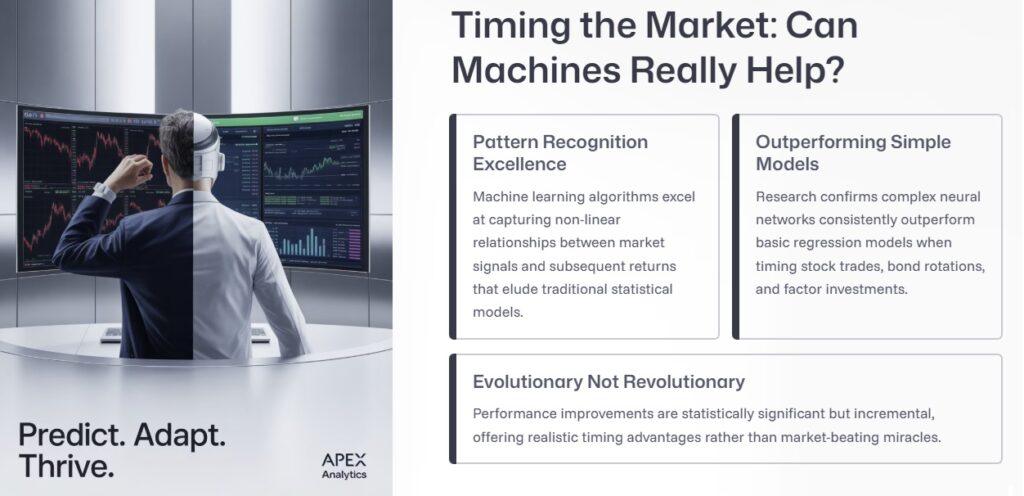
- Identifying Short-Term Trends : Short-term traders often look for momentum, breakouts, or mean reversion opportunities. Machine learning models such as recurrent neural networks (RNNs) or support vector machines (SVMs) can be trained to detect subtle shifts or trends in price action that precede market moves. For these traders, accurate predictions over hours or days can vastly improve timing and execution.
- Enhancing Technical Indicators : Many trading strategies are based on technical indicators like moving averages, MACD, or RSI. AI algorithms can optimise the parameters of these indicators or even blend multiple indicators to generate custom signals. This integration enables more responsive and dynamic trading decisions, helping traders align their timing with market momentum more effectively.
- Filtering Noise in High-Frequency Trades : In high-frequency trading (HFT), decisions are made in milliseconds. AI shines here by filtering market noise and focusing only on actionable data. Machine learning systems embedded in HFT platforms can spot fleeting patterns and execute large volumes of trades automatically with minimal human intervention.
Benefits of AI in Predictive Trading
The rise of AI stock prediction isn’t merely theoretical; many firms already employ machine learning for a competitive edge. One of the biggest advantages is the ability to process datasets of a size and complexity far beyond what humans can analyse. This comprehensive analysis can unveil correlations and market signals previously hidden to traders.
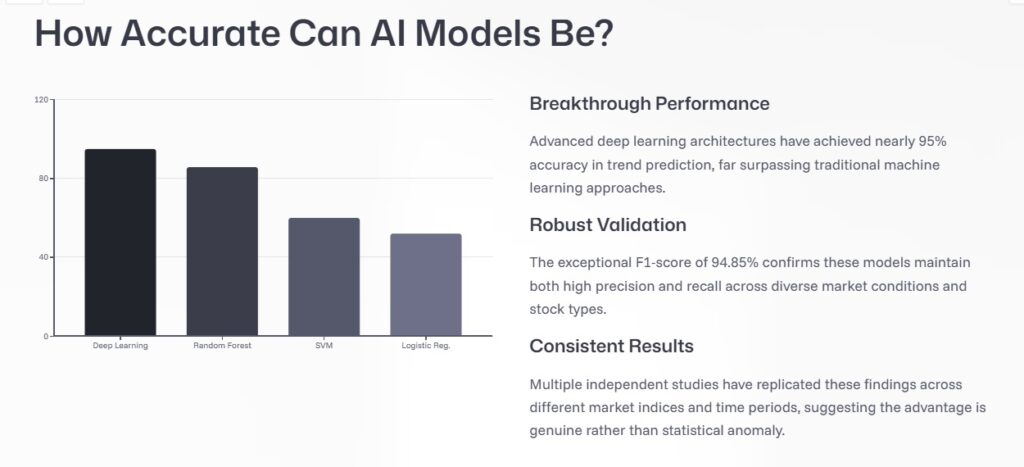
Moreover, machine learning models can test thousands of permutations in strategy testing and backtesting, allowing for a richer understanding of what works and what doesn’t. This depth of insight can boost confidence in a trading approach, especially when accurate timing is a priority.
Limitations and Challenges in AI Trading
Despite the promise, AI stock prediction is not without its limitations. Machine learning models are only as good as the data they’re trained on. If the data is biased, incomplete, or unrepresentative of current market conditions, predictive accuracy suffers. Moreover, markets can change behaviour due to unprecedented events, economic shifts, or policy changes, which historical data may not account for.
There is also the issue of overfitting, where a model becomes so closely tailored to past data that it fails to generalise in the real world. This is particularly dangerous in trading, where real-world results matter far more than historical optimisation. No AI model can guarantee future performance, and human oversight remains crucial to ensure responsibility and caution in execution.
Should You Trust AI for Trade Timing?
While AI may not replace human judgement, it can enhance it considerably. Machine learning tools provide an additional lens through which to assess opportunities, managing vast streams of data to uncover insights that might otherwise go unnoticed. For traders committed to improving their strategy, AI stock prediction can play a significant role in sharpening timing.
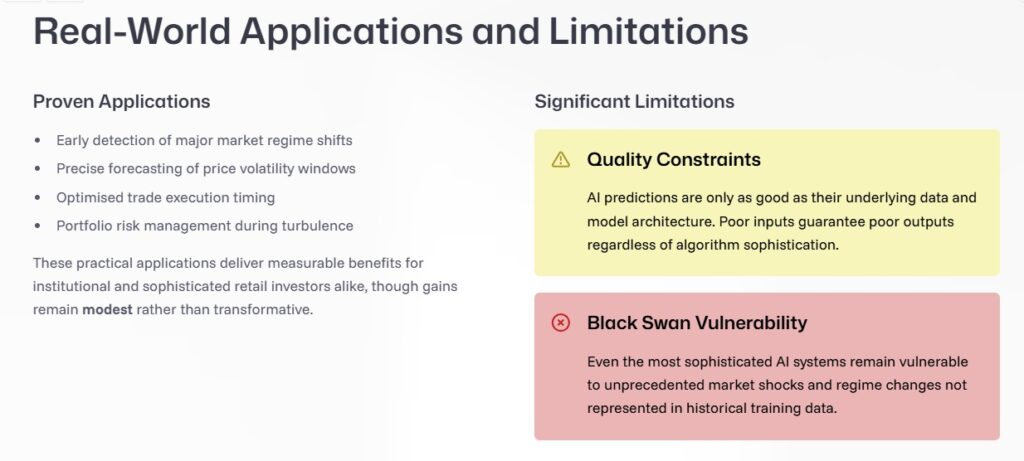
However, integrating AI into trading shouldn’t be viewed as a magic bullet. It’s a tool—albeit a powerful one—that performs best when used in combination with solid market knowledge, prudent risk management, and ongoing scrutiny of performance. Traders interested in AI should aim to understand the models they use, validate results, and retain a critical perspective, especially during periods of unpredictable market behaviour.
The Future of Machine Learning in Trading
As technology continues to evolve, so too will the role of machine learning in market prediction. Innovations in deep learning, natural language processing, and real-time data integration will likely make future predictions even more precise and timely. Eventually, the line between human and machine-driven decisions may blur further as hybrid approaches become the norm in sophisticated trading environments.
That said, the responsibility lies with the trader to stay educated, aware, and adaptive. No system is infallible, and success still depends on strategy discipline, execution, and the ability to interpret data in real-world context. AI may help you time your trades better, but your judgement remains the final call.
Conclusion: Balancing Technology with Trader Instinct
AI stock prediction offers clear advantages in identifying patterns and improving trade timing. Machine learning tools can process vast amounts of market data, spot trends early, and enhance decision-making under uncertainty. Yet, it’s essential to balance this technological edge with human insight, careful strategy, and risk management.
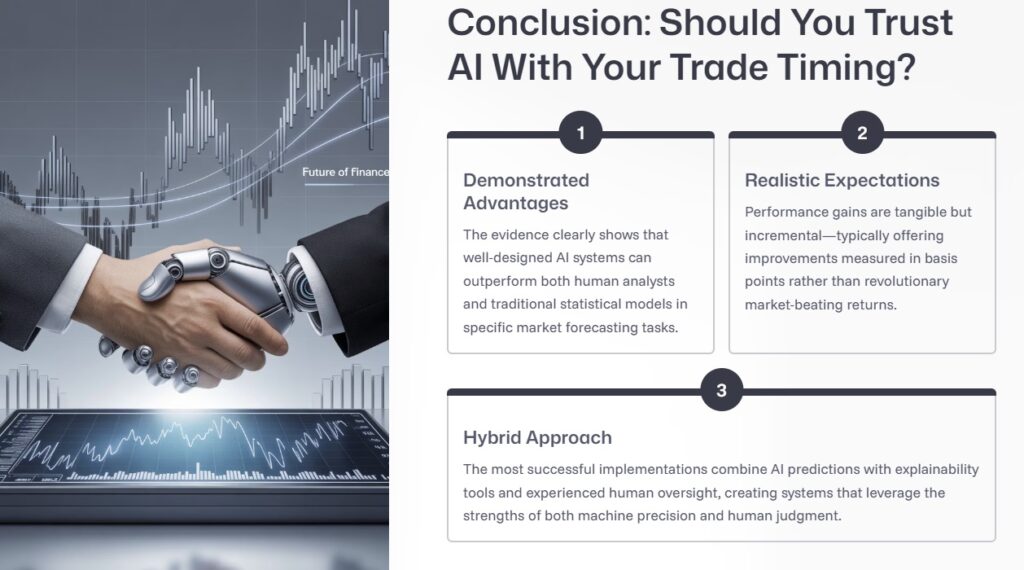
As AI continues to shape the future of trading, those who combine innovation with informed practice are bound to stand the best chance of success. Whether you’re a beginner exploring the markets or a seasoned trader seeking a competitive advantage, harnessing the predictive power of AI could elevate your timing—and your results—to new levels.