
AI Stock Trading Bots vs. AI Insights: How Confidence-Driven Tools Outperform Blind Automation
A new paradigm is reshaping the landscape of financial technology, as AI stock trading bots give way to more advanced, insight-driven solutions that prioritise performance and adaptability. While traditional AI stock trading bots operate on fixed, rule-based automation, they often lack the flexibility to respond to evolving market dynamics. In contrast, confidence-driven AI tools offer actionable intelligence—enhancing decision-making without replacing human oversight. This shift marks a move from blind automation to informed, strategic trading powered by adaptable machine learning models.
These tools leverage machine learning, predictive analytics, and sentiment analysis to generate high-confidence trade signals based on real-time data. Rather than executing trades autonomously, they assign a confidence score—a probability-based metric that quantifies the likelihood of success behind each recommendation. This approach gives investors the ability to weigh risk and reward with greater clarity, preserving human control while still benefiting from AI’s computational edge.
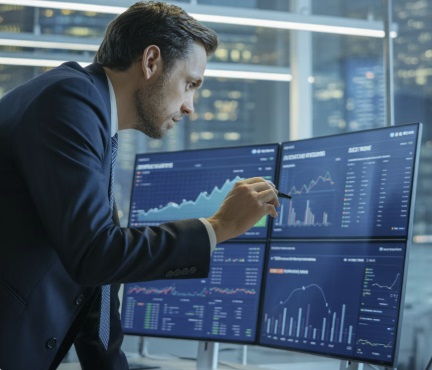
According to Accenture, firms using AI-assisted decision-making tools see up to a 35% improvement in investment accuracy compared to traditional automated bots. As volatility and data complexity rise, financial professionals increasingly prefer this hybrid model—where AI acts as a co-pilot, enhancing strategy without replacing judgment. This evolution marks a shift from automation for automation’s sake to AI-enabled, insight-driven investment decisions that combine speed, precision, and informed discretion.
Rise of AI in Financial Market
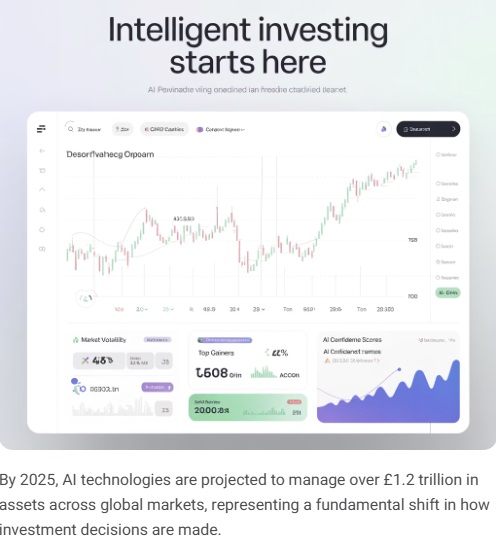
Understanding the AI Stock Trading Bot
An AI stock trading bot is a software application programmed to carry out trades in the stock market using predefined algorithms and machine learning. These bots can ingest massive amounts of data, execute orders at lightning speed, and operate around the clock without emotional bias. While this can sound ideal on paper, there’s an important caveat—many of these bots make decisions purely based on historical patterns, without a true understanding of market context or future potential.
The traditional AI trading bot operates much like a robot vacuum. It scans inputs, follows hard-coded instruction sets, and carries out automated actions. But financial markets are not living rooms—they are dynamic, chaotic, and influenced by countless human factors, policy decisions, and unforeseen global events. A bot that simply reacts to data without assessing confidence or uncertainty is making decisions in a vacuum—sometimes literally and often blindly.
Blind Automation: The Problem with Traditional Bots
Most conventional AI stock trading bots follow rule-based systems or reinforcement learning models that optimise for historical performance, not actual foresight. They react to macro trends after they occur, often too late to yield meaningful profit. Worse yet, they may continue trading during periods of high uncertainty, exposing portfolios to significant risk.
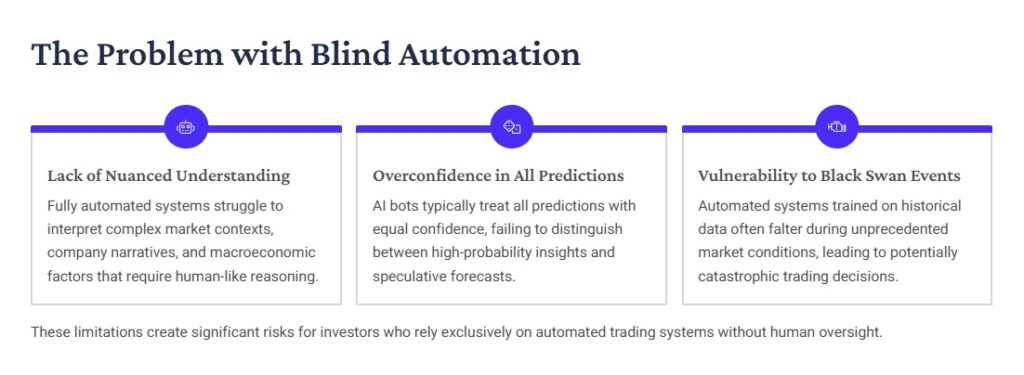
This sort of blind automation lacks the capacity for introspection. The systems do not ask: “How likely is it that my prediction is accurate?” As a result, they cannot assess the quality of their own decisions. Without this layer of interpretability or confidence analysis, results may vary wildly depending on market conditions. Traders who rely exclusively on such bots can find themselves caught in downward spirals during black swan events or during times of extreme volatility.
Confidence-Driven Tools: The Rise of AI Insights
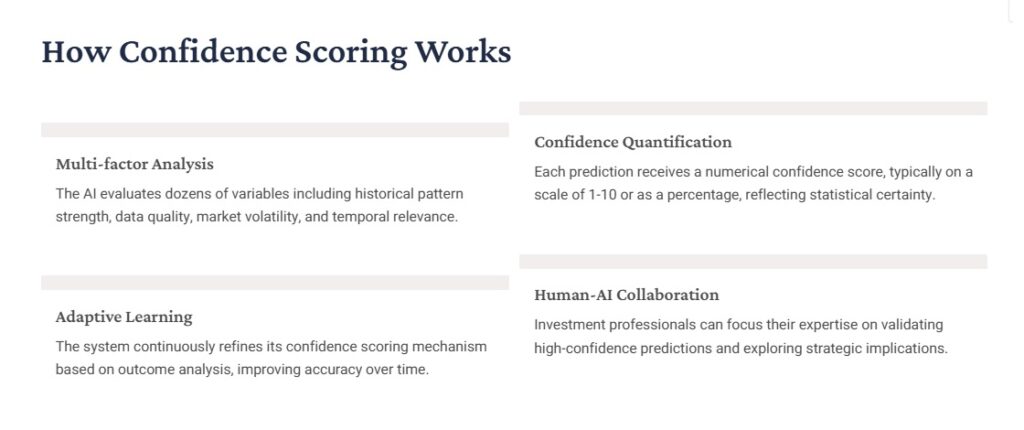
Confidence-driven AI represents a new generation of tools that go beyond static automation. These systems incorporate probabilistic models to express not just what action should be taken, but also how confident the system is in that recommendation. Instead of blindly executing a trade, a confidence-aware model evaluates the reliability of its own prediction, refraining from action when certainty is low.
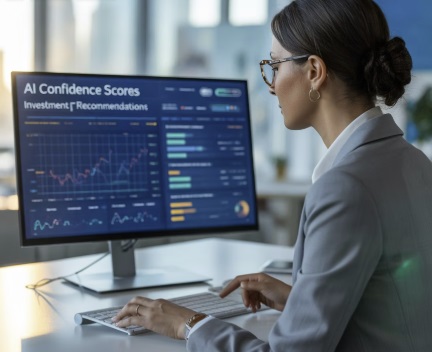
“The most powerful AI systems aren’t those that make the most predictions, but those that accurately assess the reliability of their own predictions.” – Dr. Eleanor Simmons, Director of AI Research at Cambridge Financial Institute
Measuring Uncertainty in Predictions
Advanced AI models can now quantify uncertainty around forecasts. Bayesian neural networks, for example, incorporate distribution-based outputs that assign confidence scores to each decision. This means every predicted price trend or signal comes with a risk bracket—empowering traders to weigh options more intelligently rather than acting on binary outcomes.
Adaptive Response to Market Conditions
Unlike static rule-based bots, confidence-driven AI adapts to changing markets. If the model detects a deviation in established patterns or a lower predictability threshold, it can pause trading or alert human supervisors. This responsiveness creates a more fluid, nuanced approach to stock trading, effectively bridging the gap between human intuition and machine speed.
Why AI Insights Are Taking the Lead
The modern investor demands more than raw speed. They seek tools that understand complexity, can handle noise in data, and most importantly, know when to act and when to hold back. Confidence-driven AI fosters better decision-making by aligning with these expectations. Rather than replacing human judgement, it works in tandem with it, providing reasoned guidance backed by data science.
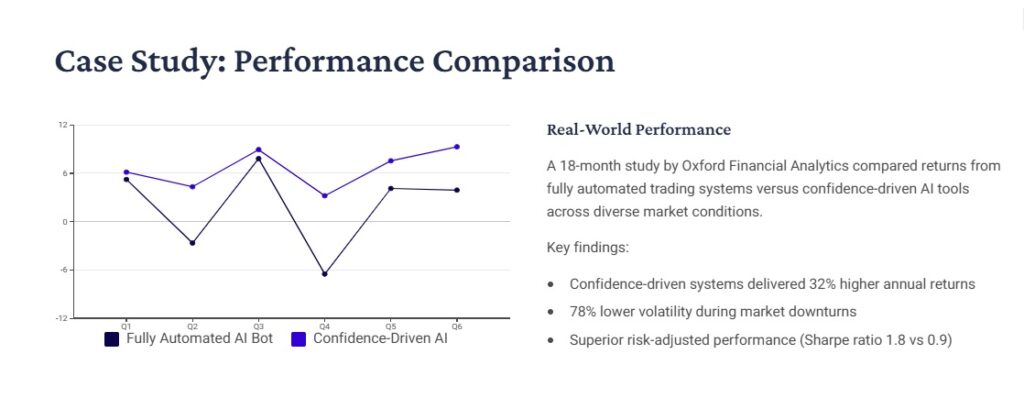
This shift from automation to insight is especially crucial in high-stakes scenarios—earnings seasons, geopolitical events, central bank announcements—where traditional bots may falter. A system that auto-trades on fragile logic in uncertain times is dangerous. One that evaluates probabilities and flags uncertain territory for further review is far more valuable.
The Future of AI in Stock Trading
As markets grow more complex, so too must the tools used to navigate them. Relying solely on an AI stock trading bot that functions through rote automation is quickly becoming outdated. The real innovation lies in developing AI that reasons, evaluates confidence, and supports investors with informed perspective rather than predetermined action.
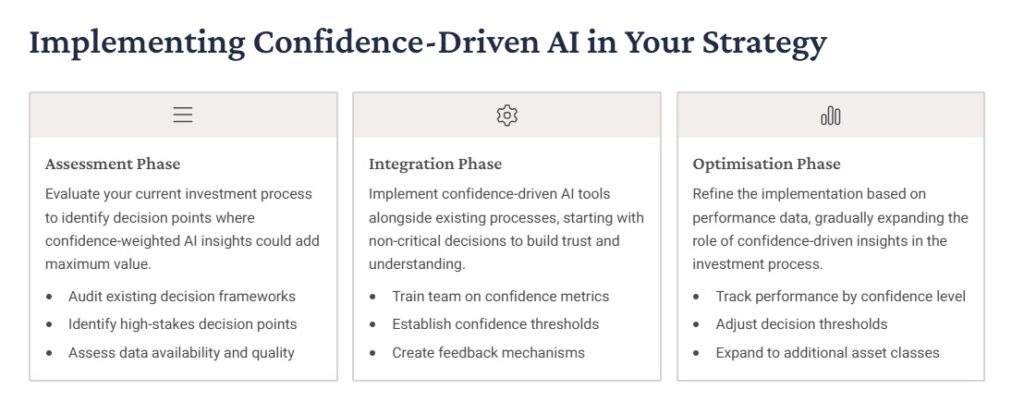
Confidence-driven AI does not aim to eliminate human traders, but to empower them—offering insights that are transparent, traceable, and grounded in statistical integrity. The future of trading belongs not to systems that act blindly, but to those that can think just enough to know when not to act.
Conclusion
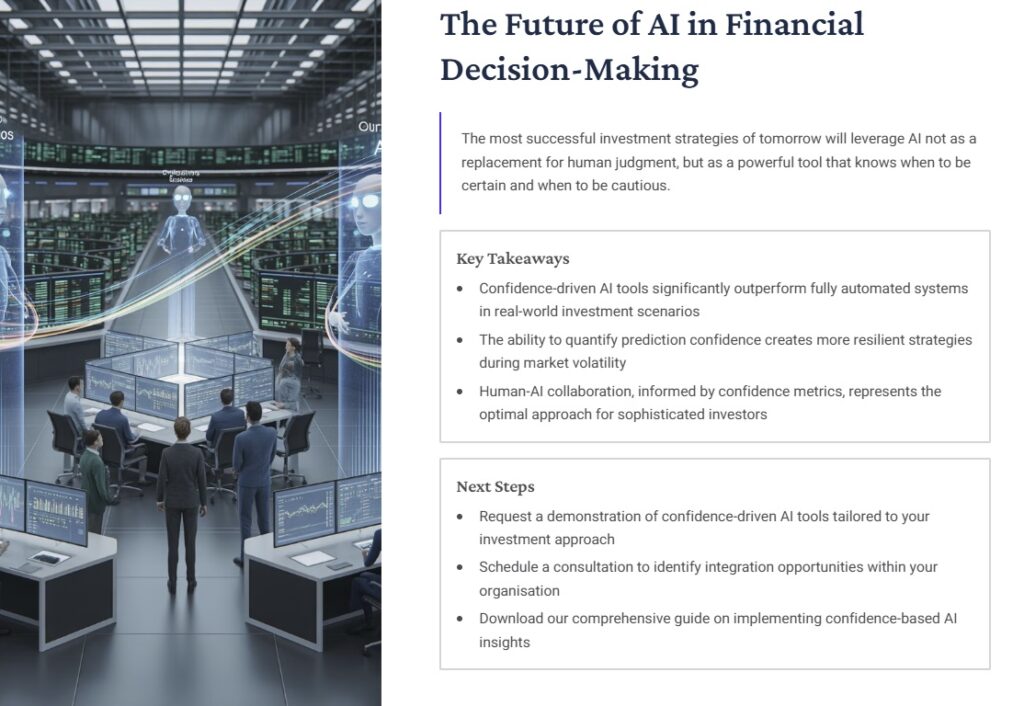
The battle between AI bots and AI insights is not just about technology—it’s about trust and risk in a world where milliseconds and percentages matter. As investors seek smarter, more adaptive systems, confidence-aware AI is proving to be the next evolution. In the ever-volatile space of stock trading, blind automation cannot compete with tools that understand uncertainty and act accordingly. Those who embrace this new generation of AI stand to gain not only more consistent returns but also greater control over the unpredictable future of financial markets.